Conceptual Design Alternatives
This conceptual plan was prepared as part of the Point No Point Feasibility Study, which was prepared to explore if an eastern outlet for the marsh would be possible and sustainable long term. Our engineer, Jessica Cote at Blue Coast Engineering, reviewed restoring a marsh outlet to the north, and determined this was not feasible. Analysis of the coastal processes in the area indicate the eastern tidal connection is viable and should be explored further.
We are also gathering input from neighbors, the nearby community, project partners, agencies, tribes, and conservation groups so that we can incorporate their ideas, concerns, priorities, and feedback into our design moving forward.
Conceptual Design for Point No Point Marsh Restoration
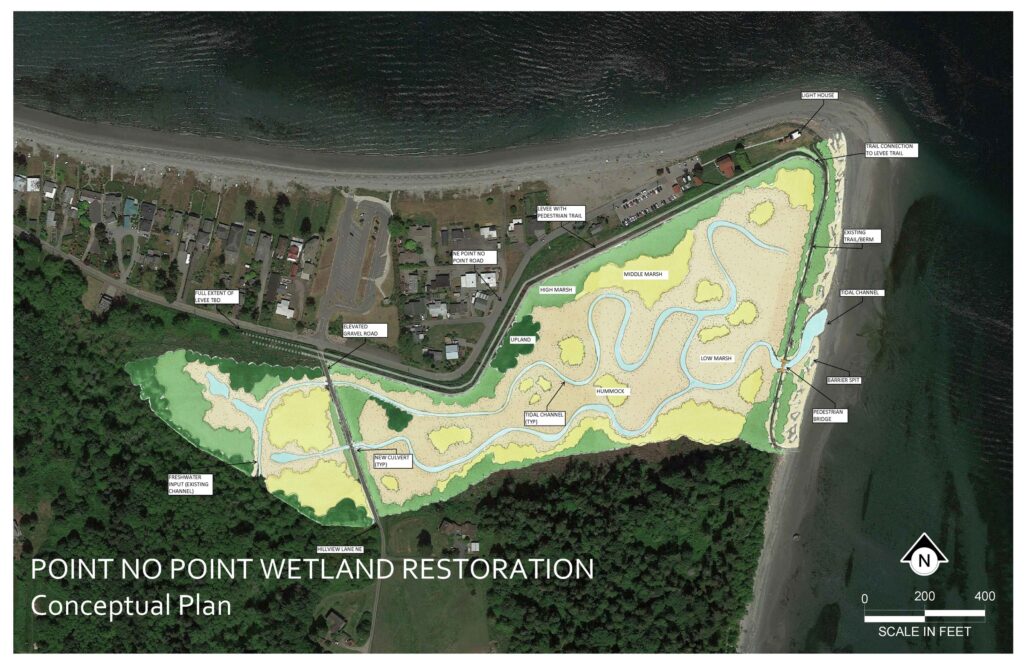
The main Conceptual Design shows the full extent of potential restoration, and the maximum habitat benefits. The tide gate is replaced by a barrier estuary shoreform which allows the creek to outlet on the east shore of the park. The existing marsh would become salt marsh habitat, as was here before human development and alterations. Juvenile chinook would be able to use this area to rest, feed, and transform from freshwater to saltwater lifestyles, including accessing the creek at the southwest corner (this helps in their transformation process). The salt marsh will also provide habitat for birds and other wildlife, and the tidal flushing of the marsh will support nearshore habitat for forage fish, also important to salmon and wildlife in the Puget Sound.
The north edge of the marsh would have a levee to protect the road and manage flooding concerns. The existing drainage ditches would be considered and hopefully improved as part of this design, depending on additional analysis we plan to conduct in the next phase. The levee along the road can also provide safe pedestrian routes to the park, to alleviate road safety concerns and privacy issues for the neighbors of the park. Hillview Lane, the private road running north-south, would remain, but will likely be raised and fish passage will be improved.
We know that there are many considerations for this design and impacts or improvements to other area concerns. We are currently seeking to listen and understand all of the important concerns of those using and living around the Park so that we can make sure we do not exacerbate any concerns and explore where the project might be able to include some improvements for them. Below are some alternatives that consider some of these concerns – more will be incorporated in the next design phase.
Conceptual Design Alternative A
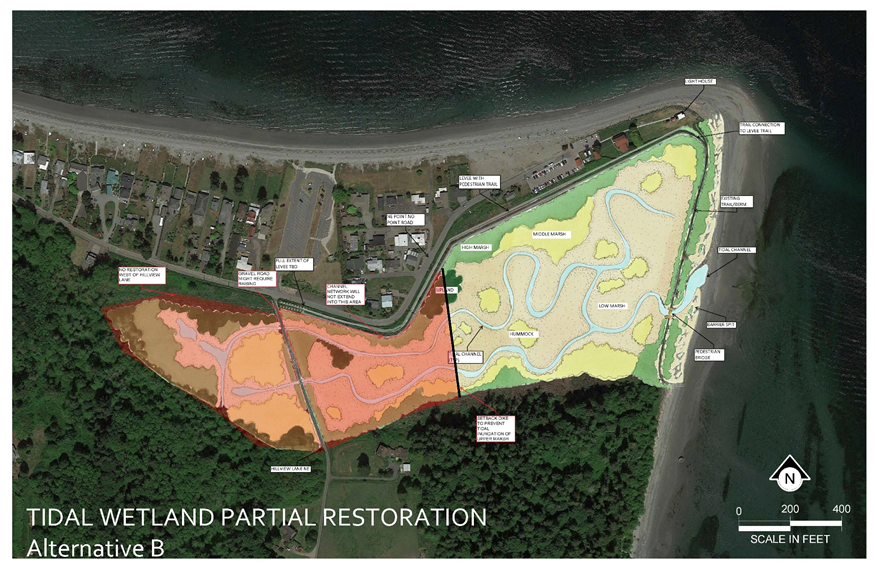
Conceptual Design Alternative B
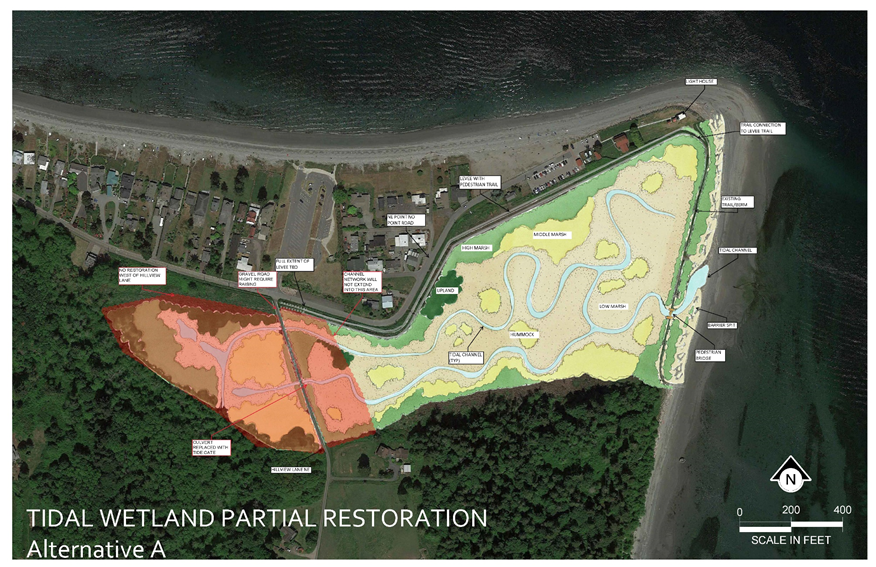
In Design Alternative A we will not restore the marsh beyond Hillview Lane (the private road heading south in the drawing). A setback levee running north to south will keep salt water from entering the west marsh, and tide gates will allow the creek to drain to the restored area. This plan restores around 85% as much as area as Design Alternative A above.
Pro’s:
- Reduced costs, through reduced footprint and a shorter levee along Point No Point Road.
- Hillview Lane may not need to be raised in this design.
Con’s:
- The north-south levee will prevent fish passage
- The resident cutthroat trout could not become a sea-run population
- Juvenile chinook using the marsh would not have access to the creek mouth, which they prefer when using this habitat.
- Less salt marsh habitat restoration.
- Less opportunity to assist in the flooding concerns along Point No Point Road.
In Design Alternative B we will not restore the marsh beyond the private parcel east of Hillview Lane (the private road heading south in the drawing). A setback levee running north to south will keep salt water from entering the west marsh, and tide gates will allow the creek to drain to the restored area. This plan restores around 65% as much as area as Design Alternative A above.
Pro’s:
- Reduced costs, through reduced footprint and a shorter levee along Point No Point Road.
- Hillview Lane may not need to be raised in this design.
- Private parcel in marsh would not be part of project.
Con’s:
- The north-south levee will prevent fish passage
- The resident cutthroat trout could not become a sea-run population
- Juvenile chinook using the marsh would not have access to the creek mouth, which they prefer when using this habitat.
- Even less salt marsh habitat restoration.
- Even less opportunity to assist in the flooding concerns along Point No Point Road.
- Pedestrians would still use current pathways to the Park, leading to safety and privacy issues.